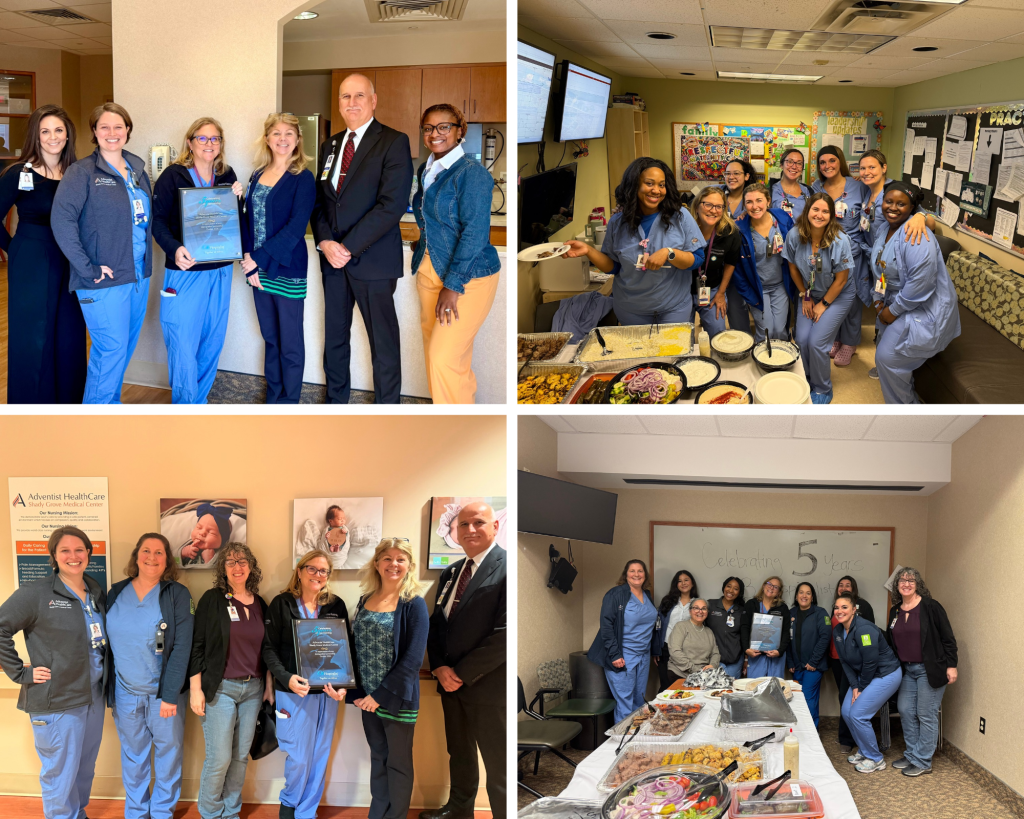
When a labor and delivery team has to act fast, minutes shape the outcome for mother and baby. Kelly Davis, nurse manager for labor and delivery at Adventist HealthCare Shady Grove Medical Center in Rockville, Maryland, can speak to that urgency.
Five years into her hospital’s partnership with Ob Hospitalist Group (OBHG), Davis has seen what around-the-clock, in-house obstetric expertise looks like in practice. The results are hard to argue with.
The numbers tell the story
Shady Grove’s labor & delivery unit delivers approximately 4,400 babies per year and runs 24/7 triage. Like many hospitals, it relies heavily on private OB/GYN physicians who manage office practices during the day and are often unavailable overnight.
When OBHG came on board, Davis’s team began tracking three core patient safety metrics: severe hypertension treatment within one-hour, postpartum hemorrhage response, and NTSV (nulliparous, term, singleton, vertex) cesarean rates.
The severe hypertension results are striking. Before OBHG, Shady Grove was treating cases within the recommended timeframe far less consistently. Today, they’ve surpassed 90% compliance for two consecutive years and recently reached 100% compliance from April 2025 – November 2026.
That leap didn’t happen by accident. “They’ve been a partner at the bedside, as well as in this development,” Davis said. OBHG clinicians worked directly with nursing leadership to build a protocol and a standardized communication script, giving nurses a clear, confident pathway for reaching providers and getting time-sensitive orders placed. The result was measurable, sustained improvement.
NTSV rates remain a work in progress across the unit, as they do at many institutions. But Davis noted that OBHG’s NTSV rate consistently outperforms the other provider groups at her hospital.
“What OBHG is doing is working,” she said. “They have consistently stayed at a lower average than the rest of the pack.”
Always there, always a team player
The clinical impact extends well beyond metrics. At Shady Grove, private physicians are not always in-house, particularly at night. When a situation changes quickly, having an OBHG hospitalist immediately available makes a critical difference.
“When we have those really critical patients come in, or we have situations change really quickly, it is absolutely amazing that they’re always willing to step in and help,” Davis said.
That reliability also strengthens the unit’s readiness through simulation. OBHG’s program includes a commitment to drills and staff development, and Davis said those drills have become central to how her team trains. The unit runs highly realistic postpartum hemorrhage simulations with OBHG hospitalists participating as clinical leads, giving nursing staff real physician feedback during high-stakes scenarios rather than practicing without that perspective.
“They’ve been a great partner with us in really getting that provider mindset,” Davis said. “It’s been really, really fantastic.”
Continuity that reaches into the community
The Shady Grove partnership extends beyond the hospital walls. OBHG also provides clinical support for the hospital’s longstanding community OB/GYN clinic, the Maternal Care Center at Shady Grove Medical Center, which serves low-income and Medicaid patients designated by the county. The clinic has operated for more than 25 years.
Through the OBHG partnership, patients see the same designated provider consistently in the clinic before transitioning to the hospital for delivery. That continuity matters, particularly in a patient population where many are Spanish speaking. The majority of OBHG providers at Shady Grove are fluent in both Spanish and English.
“Having that reduction of a communication barrier makes a huge difference for our patient safety and satisfaction,” Davis said.
The clinic began accepting private insurance in August 2026, which Davis expects will expand access to OBHG’s midwifery care across a broader segment of the community.
A model worth replicating
When asked what she’d say to other hospital leaders evaluating an OB hospitalist solution, Davis didn’t hesitate.
“Having OBHG as our hospitalist service, who are here 24/7, always willing to support in emergencies, always team players, helping to bring in fresh information, we depend on them. And I cannot recommend them highly enough to other places.”
For hospital leaders managing units where private physicians aren’t consistently on-site, that kind of confidence, backed by five years of measurable safety outcomes, is worth paying attention to.