

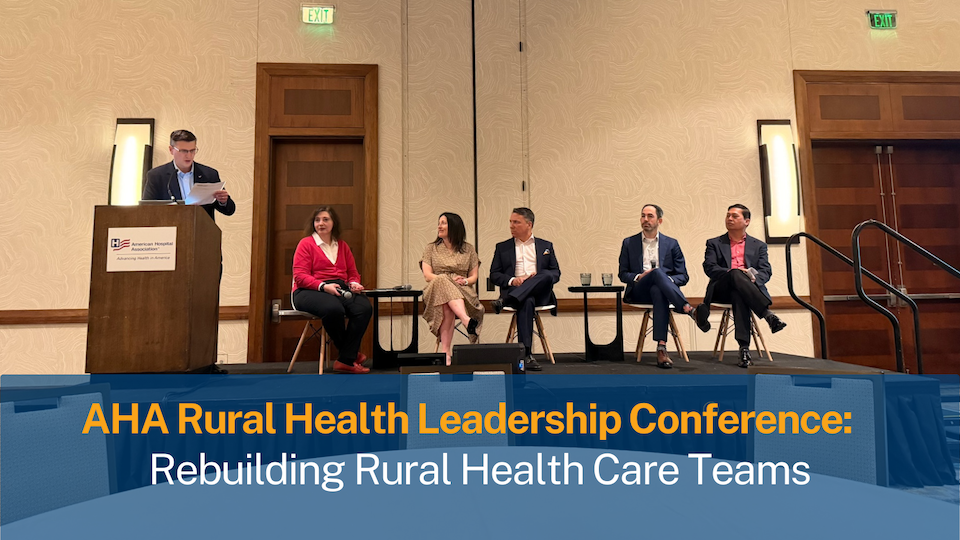
At this year’s American Hospital Association (AHA) Rural Health Care Leadership Conference, one message was clear: rural hospitals are being asked to do more with less and to make extraordinarily difficult tradeoffs in the process.
More than 130 rural hospitals have closed since 2010, and over half of rural counties lack hospital-based obstetric care. The conversations at AHA were not theoretical. They were grounded in the realities of sustainability, workforce strain, and what communities stand to lose when local access to care disappears.
Ob Hospitalist Group (OBHG) CEO Lenny Castiglione had the opportunity to join a panel discussion on Rebuilding Rural Health Care Teams and Strategic Approaches to Workforce Growth, alongside national rural health leaders.
The session focused on one of the most urgent challenges facing rural hospitals today: how to build workforce models that are sustainable, high-quality, and aligned with community needs.
Workforce challenges are personal, not abstract
As Lenny shared during the panel, workforce shortages in rural health care are deeply personal. They affect neighbors, families, and the clinicians who show up every day to serve their communities. In obstetrics especially, staffing instability can quickly become an access issue.
While many conference solutions highlighted advances in technology — from telehealth platforms to new clinical software — OBHG stood apart in its focus on people: physicians physically present in hospitals, integrated care teams, and sustainable, long-term coverage models.
Technology plays an important role. But preserving access to maternal care requires more than temporary relief or grant-funded innovation. Rural leaders consistently emphasized they are not looking for short-term fixes, they are looking for models that endure beyond the funding cycle.
Key themes from the panel discussion
Several themes resonated throughout the conversation:
- Culture matters more than ever
Recruitment is only part of the equation. Clinicians stay where they feel valued, supported, and connected to a meaningful mission. In rural hospitals, culture directly shapes team engagement and patient experience.
- Partnership and flexibility are critical
Innovative staffing approaches and collaborative partnerships can help reduce burnout and stabilize coverage. But these models must align with quality standards and the specific needs of each community.
- Training programs build roots
When physicians train in rural communities, they are far more likely to remain there. Investment in rural residency and training pathways is one of the most powerful long-term strategies for workforce stability.
- There is no single blueprint
Every rural hospital serves a unique community. Strong leadership requires listening carefully and tailoring solutions to local realities.
“The core issue is limited resources. When funding shifts or a key clinician leaves, these hospitals are left asking, “What do we do next?” That’s where we step in—not just to replace a physician, but to rethink the care model. By incorporating clinicians and designing more sustainable workforce solutions, we help build systems that reduce reliance on constant locums turnover and strengthen long-term stability.
Health system leaders are clear: they want to keep care close to home and ensure moms and babies can receive care in their own communities.” – Lenny Castiglione, CEO, Ob Hospitalist Group
Moving from temporary relief to structural solutions
Grants and public funding can provide critical relief. But as many leaders at AHA noted, these supports are often temporary by design. Preserving rural maternal health access will require structural solutions that align workforce strategy, reimbursement models, and community need.
The question is not whether rural hospitals can adapt — they have proven their resilience time and again. The question is whether the broader health care system is willing to rethink traditional staffing and care delivery models alongside them.
OBHG left the conference encouraged. Rural health leaders are innovative, resilient, and deeply committed to keeping high-quality care close to home. OBHG is proud to be part of that conversation and part of the solution.