

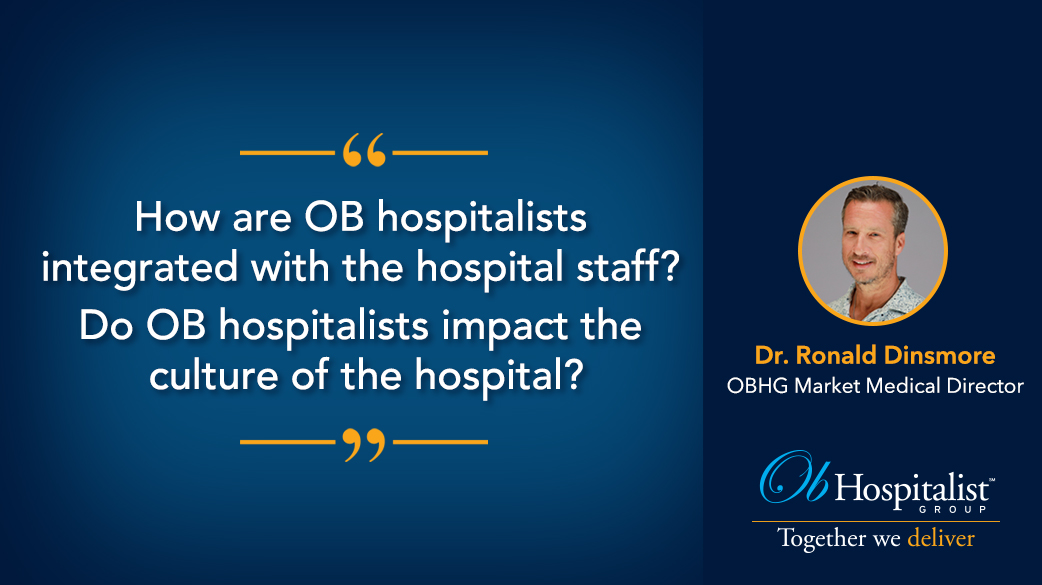
“We are an integral part of the community here at the hospital. We’re in house 24/7. We can handle anything that comes in, whether it be an emergency, non-emergency, we cover the floors, we come to the emergency room. So there’s always a safety net for the physicians.Having been on the other side of it being in private practice, there were days when I was in my office and I knew that I had a patient at the hospital. Every time the phone would ring when I was with patients or in the office, I was thinking all right now, I have to run that 20 minutes like a crazy person to the hospital. Because you’re trying to balance keeping your patients happy in your office.
(As an OBHG clinician we serve as the) safety net for private practitioners, we’re here in case they don’t make it, we’re here to take care of their patients. We’re here to facilitate any emergencies. But we’re also part of the staff that the culture here at the hospital, we help teach the nurses and we’re part of the administration as well. And we also have teaching responsibilities and are held to the clinical standards set by ACOG and ABOG. Myself, I’m vice chairman of the department so being (an OB hospitalist) doesn’t take away from someone being an integral part of the hospital community.”
Watch below for Dr. Dinsmore’s full comments:
To explore how an OB hospitalist program can benefit your hospital, let’s connect.
If you are a clinician interested in joining our collaborative team of experts, let us know and we’ll be in touch.