

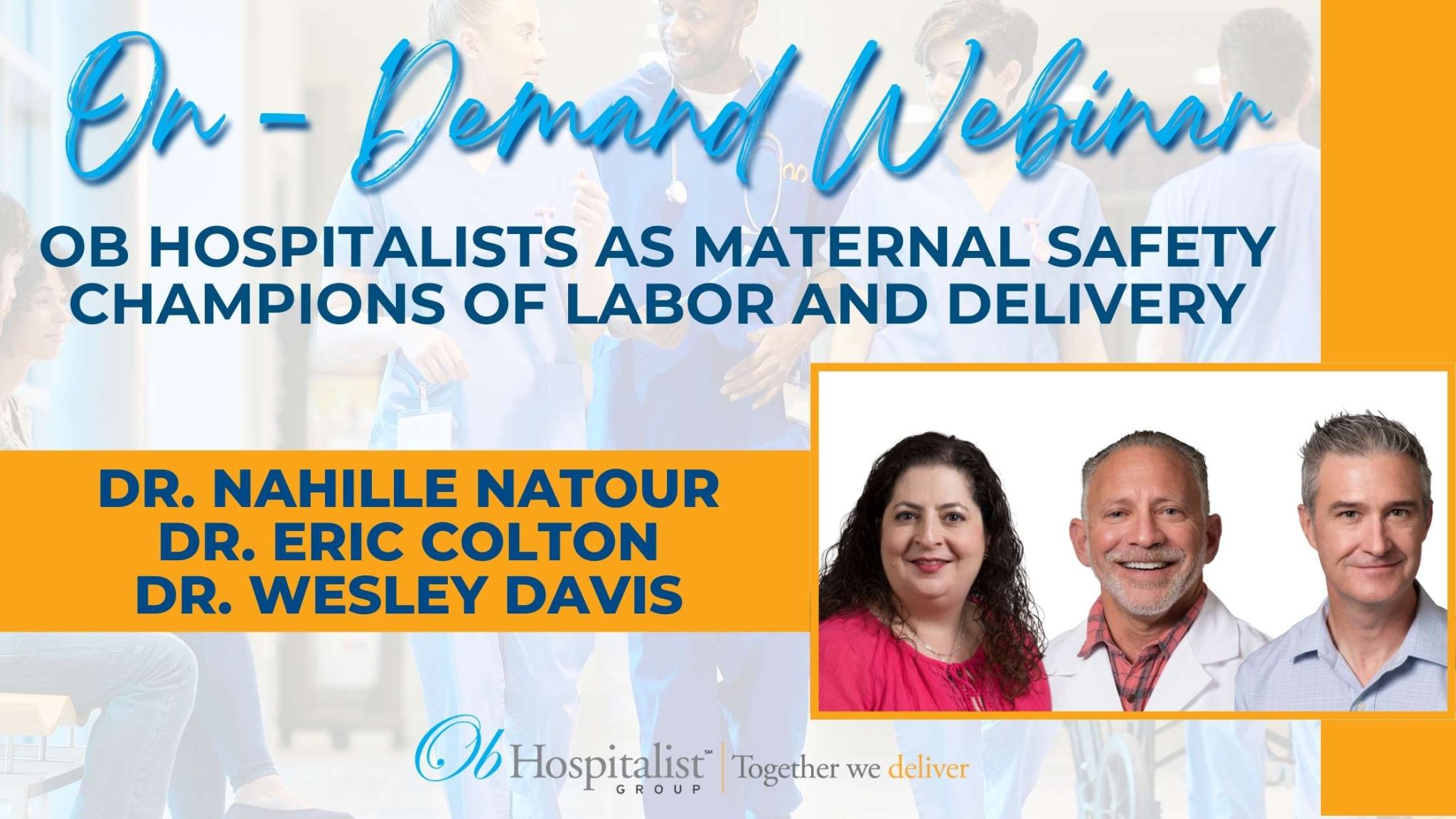
The field of obstetrics is evolving rapidly and OB hospitalists are emerging as key leaders in ensuring maternal safety and elevating the quality of care for labor and delivery patients. In a recent webinar titled “OB Hospitalists as Maternal Safety Champions of Labor and Delivery,” experts shared valuable insights on the role these specialists play in hospitals nationwide.
What makes OB hospitalists essential?
OB hospitalists are board-certified obstetricians who are present in the hospital 24/7. This constant availability allows them to respond immediately to obstetric emergencies, collaborate with nursing staff, and support hospital leadership in implementing safety protocols.
Dr. Wesley Davis, Vice President of Clinical Operations for Ob Hospitalist Group (OBHG), emphasized that hospitalists’ sole focus on labor and delivery makes a significant difference in maternal care. Unlike private practitioners who juggle office visits and surgeries, OB hospitalists concentrate entirely on patient safety and care within the hospital.
Building a culture of safety and education
Dr. Nahille Natour, Senior Market Medical Director for OBHG, highlighted the hospitalists’ role as educators. By leading safety drills, conducting simulations, and updating clinical protocols, OB hospitalists help maintain evidence-based practices. Dr. Eric Colton, Senior Market Medical Director for OBHG, shared an example of improving postpartum hemorrhage management by updating hospital protocols and adopting innovative technologies.
“One of the critical ways we ensure safety is by following evidence-based guidelines and championing their adoption within the hospital,” noted Dr. Natour. This leadership not only fosters a culture of safety but also builds trust with community physicians and hospital staff.
Collaborative partnerships
Collaboration is a cornerstone of the hospitalist model. OB hospitalists work alongside community physicians, often stepping in to manage emergencies so that private doctors can focus on their office work or surgical schedules.
“We’re there to help and guide when needed,” said Dr. Davis. “Sometimes just having that extra set of hands and expertise makes all the difference.”
Dr. Colton recalled a case where he assisted a younger physician with a complex forceps delivery, successfully avoiding a cesarean section. “It’s rewarding to share knowledge and help improve outcomes for both patients and doctors,” he added.
Improving work-life balance for physicians
The hospitalist model also offers significant benefits for physician work-life balance. By covering labor and delivery responsibilities, OB hospitalists allow community physicians to take needed breaks without compromising patient care.
“When I was in private practice, uninterrupted nights of sleep were rare,” shared Dr. Davis. “Having OB hospitalists available to step in can extend careers and improve overall job satisfaction for private physicians.”
Addressing maternal health challenges
Maternal mortality remains a pressing issue in the U.S., and OB hospitalists are uniquely positioned to address this challenge. Their immediate presence allows for rapid intervention in emergencies, such as postpartum hemorrhages and severe preeclampsia cases.
Dr. Natour recounted a recent case where a patient arrived with significant bleeding and fetal distress. Thanks to the hospital team’s quick response, both mother and baby had positive outcomes.
Additionally, hospitalists are tackling broader issues, such as the growing trend of home births and the national OB/GYN shortage. “By offering flexible work schedules and focused care, we’re helping address these systemic challenges,” noted Dr. Colton.
The future of OB hospitalist care
As OBHG continues to expand across 39 states, the role of OB hospitalists will become even more critical. Their contributions to maternal safety, physician collaboration, and healthcare innovation make them indispensable champions of labor and delivery.
If you’re an OB/GYN clinician considering a career shift or a hospital administrator looking to enhance maternal care services, exploring the OB hospitalist model could be a game-changer. As Dr. Colton aptly put it, “It’s a career path that makes a real difference—both for patients and for physicians.”
Watch the entire webinar here!
Ready to expand your career with OBHG?
Our recruiters want to help you find the job location that’s the best fit for you and your family. Explore our clinical careers or sign up to meet on-one-on with an OBHG clinician.