

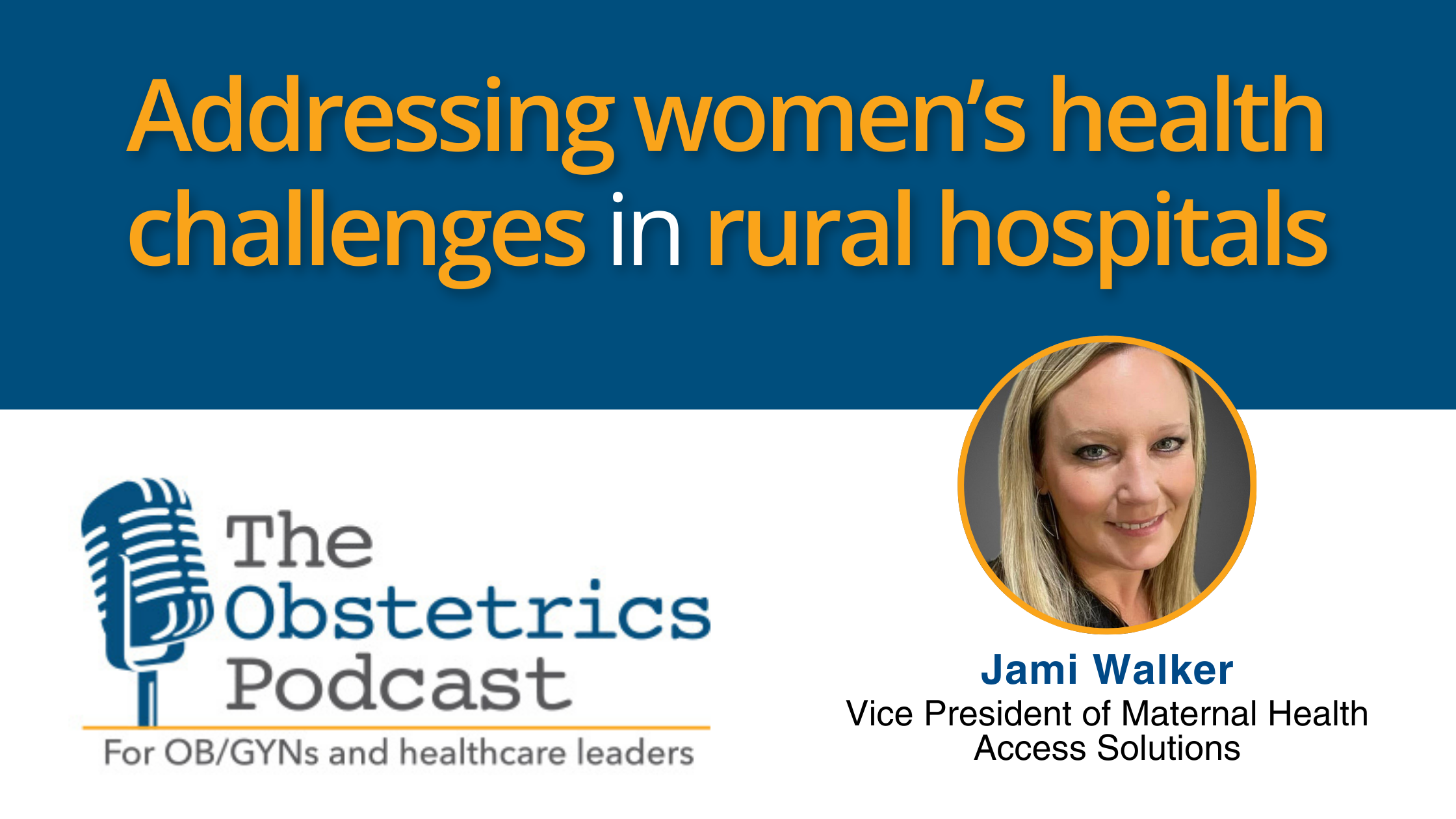
To listen as Jami Walker, Vice President of Maternal Health Access Solutions at Ob Hospitalist Group, discusses challenges faced by rural hospitals when it comes to providing access to women’s healthcare, hit the play button below:
Rural hospitals face significant barriers in providing comprehensive women’s healthcare, from staffing shortages to the closure of labor and delivery units. In a recent episode of The Obstetrics Podcast, Jami Walker, Vice President of Maternal Health Access Solutions at Ob Hospitalist Group (OBHG), sheds light on these challenges and highlights strategies hospitals can adopt to ensure women in underserved areas receive the care they need.
Maternity care deserts leave women without options
Millions of women across the country live in maternity care deserts—areas without a hospital, birthing center, or obstetric clinician. These gaps force women to travel long distances for care, often 30 to 60 miles or more. For some, this isn’t just an inconvenience—it can mean delaying or missing essential prenatal visits, increasing the risk of complications. Addressing these care deserts, Jami emphasizes, is essential to ensuring geography isn’t a barrier to quality maternal care. “I believe there are things that keep hospital leaders up across the country,” says Jami. “And I think access to care for women is of great concern, specifically in rural communities in America.”
The impact of diversion on communities
Some rural hospitals don’t close their labor and delivery units permanently, but instead must temporarily divert services due to staffing shortages or other challenges. These diversions, however brief, can have a lasting effect on public perception. “Once it’s happened, even if it was just for a few hours or a day, the perception is you shouldn’t go there, because you may or may not receive care,” Jami explains.
This erosion of trust makes it harder for hospitals to maintain their role as reliable healthcare providers. Diversions disrupt patient confidence, and in tight-knit rural communities, reputational damage can spread quickly. Overcoming this challenge requires not just restoring services but rebuilding trust with patients and their families.
A personal connection to rural healthcare
Jami’s passion for rural healthcare stems from her upbringing in a small town in Southern Illinois, where one dedicated family physician served the entire community. She admires the resilience of rural healthcare teams, who often wear multiple hats to provide care. “That means some days, the CEO has to help pass out trays, and some days, the physicians also are pitching in with the nurses,” she shares, reflecting on the collaborative spirit that drives her commitment to rural health.
Tailored solutions for rural hospitals
Jami stresses that there’s no one-size-fits-all solution for rural hospitals. Each facility has unique needs and capabilities that require a customized approach. From assessing staffing requirements to identifying the best clinician types—such as nurse practitioners and certified nurse midwives—rural hospitals must adopt strategies that fit their specific circumstances.
By tailoring care models to their specific challenges, hospitals can strengthen their women’s health services and provide consistent, high-quality care. Optimized scheduling, diverse provider types, and operational efficiency all play a role in ensuring continuity of care for rural communities. These tailored solutions help improve access and outcomes for women in underserved areas.
Why it matters
The challenges facing rural hospitals affect entire communities, not just individual patients. Mothers in rural areas often face long travel times, limited resources, and uncertainty about where they can safely deliver their babies. These barriers have far-reaching consequences for the health and well-being of families.
By implementing innovative solutions and best practices, hospitals can rise to meet these challenges and make a lasting impact on maternal health in rural America. Solutions that address these systemic issues ensure that no woman is left without the care she needs during one of life’s most critical moments.
For more insights into the challenges faced by rural hospitals–and to learn how hospital leaders might begin to address them–visit https://obhg.com/maternalhealthaccesssolutions and don’t forget to share this podcast episode on your social channels. Check out the entire podcast library for more topics of interest.