

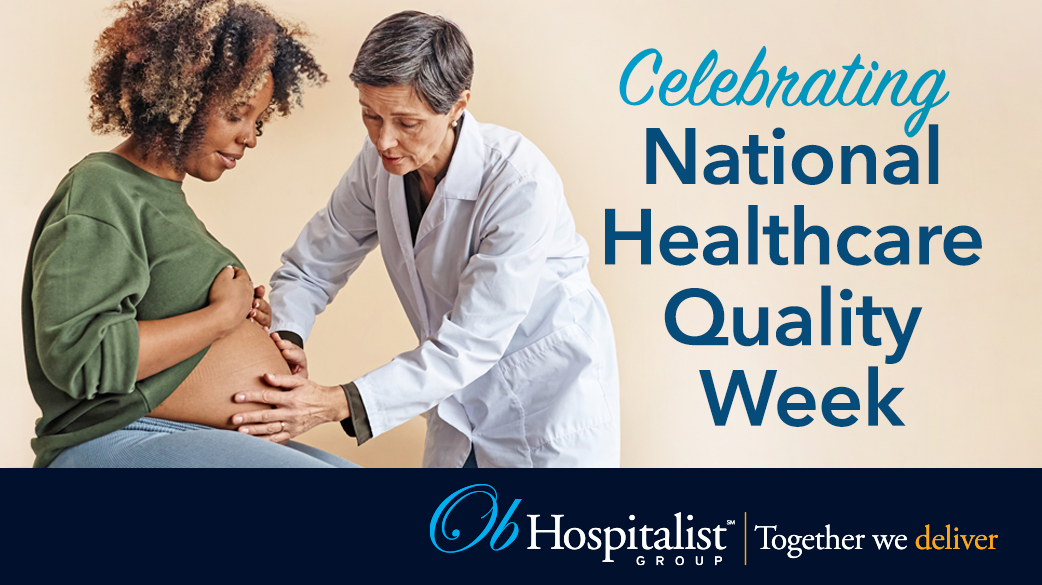
National Healthcare Quality Week recognizes and celebrates the dedication of healthcare professionals who work tirelessly to improve patient outcomes. Ob Hospitalist Group (OBHG) takes pride in contributing to the ongoing efforts of ensuring high-quality care in labor and delivery and women’s services across the healthcare system.
Collaborating for continuous improvement and safer care
OBHG’s quality team supports clinicians and hospital partners by offering the resources and guidance necessary for safe, high-quality care. They work closely together to implement best practices, streamline processes and enhance outcomes.
Leah Hanson, senior quality improvement specialist, focuses on clinical quality improvement projects, including reducing NTSV C-section rates and conducting surveys to evaluate safety culture. “A key part of my role is working directly on quality improvement with our hospital partners and clinicians to ensure that every environment where we provide care is safe.”
Leah is also involved in developing educational resources, such as virtual simulations and best practice materials, to support continuous improvement. “My goal is to create a collaborative environment where sites can learn from one another. If one of our hospital programs excels in a particular area, they can share their successful processes. Conversely, if a program faces a specific challenge, other sites and clinicians can offer solutions based on their own experiences. This type of community learning is what we’re aiming for.”
Accelerating better outcomes
Data is essential for driving quality improvements. The quality team leverages advanced analytics to monitor performance metrics, patient outcomes and key indicators. This allows them to pinpoint areas for improvement and make informed decisions that enhance care and safety.
Sara Brown, quality analyst, highlights consolidating quality metrics and improving data visualization to streamline processes and reduce administrative burdens. The team aims to enhance clinician education and support, ensuring actionable data and effective protocols.
“We’re working closely with site directors to educate them on the quality metrics we monitor, how different systems influence our performance, and the role of risk-sharing agreements,” said Brown. Our goal is to streamline and consolidate the various types of data they deal with, making it easier to understand and visualize. We’re calling this initiative the Quality Clinician Leadership Collaborative.”
Empowering clinicians for excellence and impact
Healthcare professionals require the right resources, support and environment to provide outstanding care. Therefore, the team focuses on the growth and well-being of clinicians. By offering continuous education and leveraging data analytics, OBHG empowers teams to excel in their roles.
Together, OBHG continues to make strides in improving patient outcomes and fostering a healthcare environment that prioritizes safety, efficiency and excellence.
“This year is all about supporting clinicians,” said Melanie King, OBHG manager of quality. We’re taking our efforts beyond just data, expanding our team’s reach beyond OBHG and into the wider health system. We’re collaborating directly with hospital partners and clinicians on a one-to-one basis. By providing this support, we’re also strengthening hospital quality departments—making an even greater impact. It’s going to be a significant year.”
A commitment to quality
“At OBHG, our goal is to deliver the best possible outcomes for our patients. To achieve this, we rely on data to assess our current performance and implement strategies for continuous improvement. Our quality team is committed to supporting our clinicians in advancing this mission and enhancing maternal healthcare throughout our network.” – Dr. Mark Simon, Chief Medical Officer