

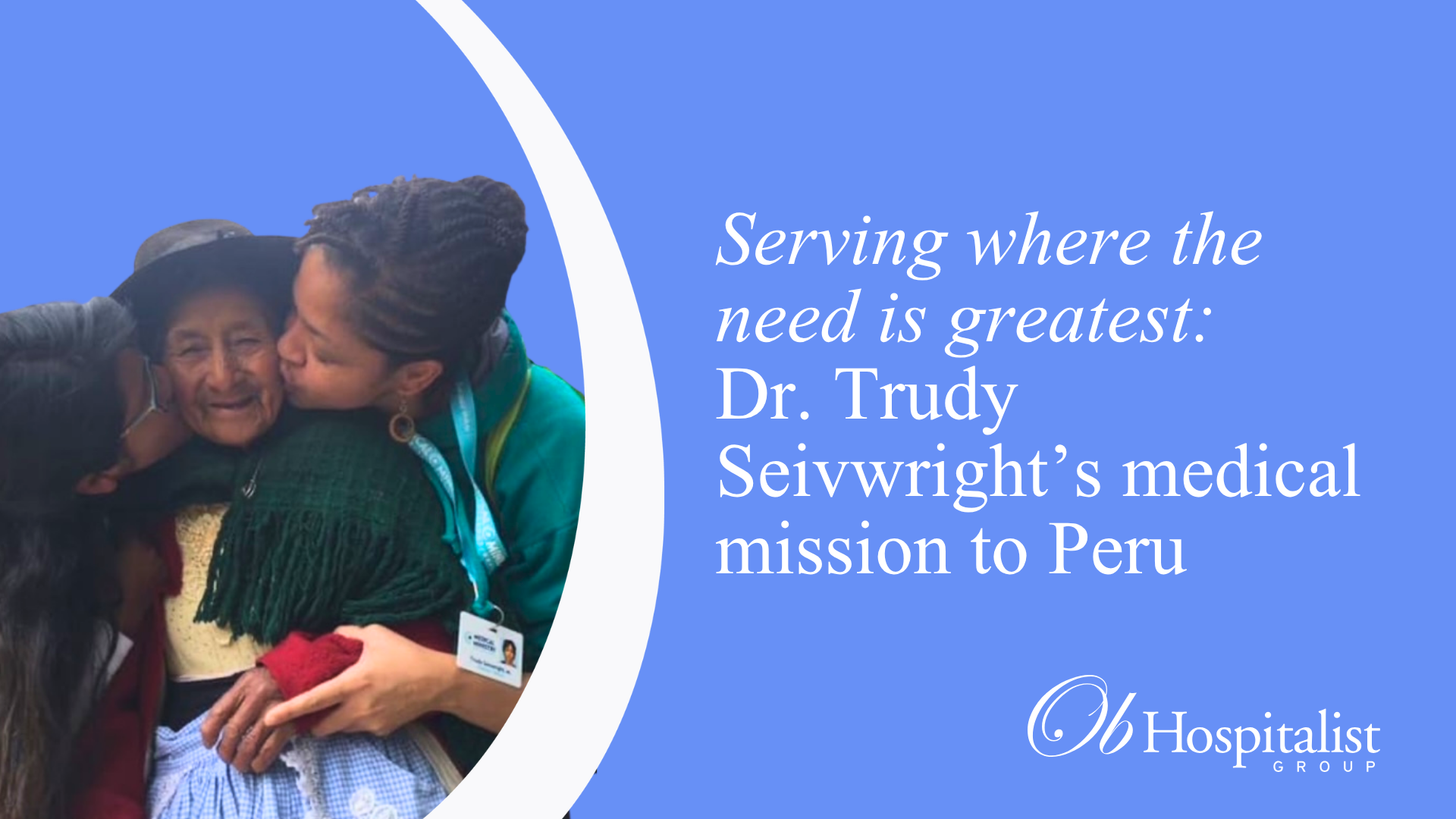
At OBHG, we empower our employees to make a meaningful impact in caring for women and children worldwide by supporting their participation in medical mission trips. The flexibility provided by a career as an OB/GYN hospitalist makes it easier for our clinicians to pursue these humanitarian endeavors.
For over a decade, Dr. Trudy Seivwright has traveled to Peru annually to provide medical care to patients who have limited or no access to healthcare. What began in 2013 as a single medical mission trip has evolved into an annual commitment, one that continues to shape her perspective as a physician and remind her of why she chose medicine in the first place.
Working with Medical Ministry International, a Christian medical missions organization, Dr. Seivwright joins a team of clinicians from the United States and Canada who travel to rural communities across Peru. The group sets up temporary clinics in small villages—often under tents—providing care to patients who might otherwise go years without seeing a healthcare professional.
Bringing care to remote communities
The work is hands-on and deeply personal. Each morning, the team travels from a central base to a nearby village, where they build a temporary clinic and begin seeing patients.
As an OB/GYN, Dr. Seivwright focuses on women’s health—providing checkups, performing Pap smears, and addressing gynecologic concerns for women who rarely have access to specialized care.
Many of the women she sees live in remote mountain communities and face significant barriers to healthcare, including poverty, limited transportation, and cultural stigma surrounding women’s health.
Despite the challenges, the impact of these visits is profound.
“It’s a very fulfilling experience,” she says. “You see how much need there is, but also how grateful people are for even the most basic care.”
Compassion beyond medicine
Medical care is only part of the mission.
The team spends time listening to patients’ stories, praying with them, and offering encouragement. Many patients arrive carrying emotional burdens as well as physical ones, and clinicians often find themselves acting as counselors as well as caregivers.
For Dr. Seivwright, these moments are the ones that stay with her long after the trip ends.
“You have to be careful because you absorb some of the pain people share with you,” she says. “But you’re also grateful that they trust you enough to open up.”
At times, the stories are heartbreaking. Yet the experience also reinforces the power of compassion and connection in medicine.
A reminder of why we practice medicine
Each year, the trip leaves Dr. Seivwright both humbled and inspired.
“These missions remind me why I became a physician,” she explains.
In Peru, even simple resources—clean water, medical supplies, routine screenings—can make an enormous difference in someone’s life. The experience also deepens appreciation for the resources and healthcare systems many clinicians rely on every day in the United States.