

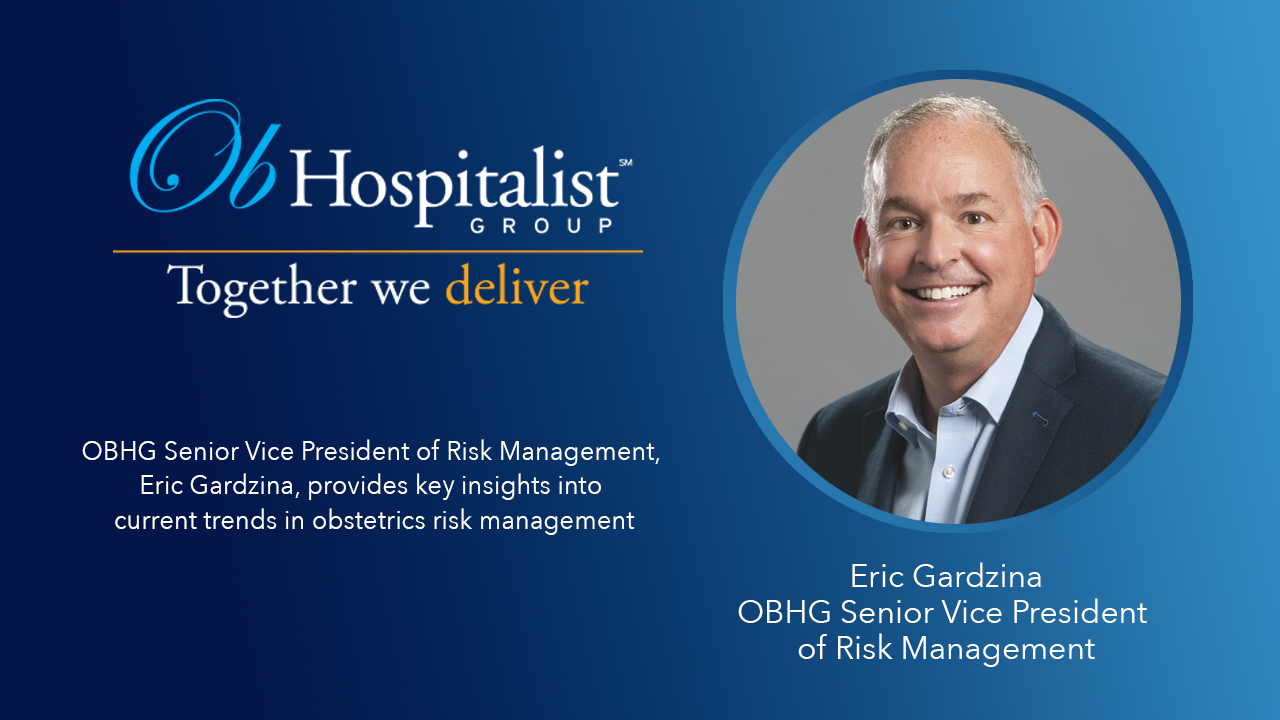
Eric Gardzina, OBHG’s Senior Vice President of Risk Management says that nuclear verdicts and the OB/GYN physician shortage are two hot topics in obstetrics risk management this year, but there are steps that healthcare organizations can take to reduce risk.
We recently got Eric’s take on the latest obstetrics risk management trends and a deeper understanding of how OBHG’s risk management team works with hospitals across the country.
What are some of the hot topics in obstetrics risk management this year?
The hottest topic is the large “nuclear verdicts” people hear about. Nuclear verdicts are described as being worth $10 million or more. Just this year a jury in Illinois awarded a family $40 million for a birth injury claim. There was also a $200 million verdict in Pennsylvania. This is a hot topic everyone is worried about, there are concerns that potential claims could turn into a giant verdict. It is interesting that these nuclear verdicts have tended to be in some of the same jurisdictions, although we’re now starting to see them occur in other areas. At OBHG, we’ve shown that our programs reduce risk, claims and lawsuits. There’s a massive connection to reducing your risk profile by following best practices and delivering safe care.
How does the national OB/GYN shortage impact risk management?
For a hospital, having a hard time filling shifts will increase risk. Your physicians are working more hours which increases risk, there are open slots in the schedule which increases risk, you might have doctors filling in who may not know your hospital policies which also increases the risk of malpractice. OBHG helps hospitals decrease this risk by providing 24/7 care at the hospital. Even if there is a shortage of physicians in the community, OB hospitalist coverage at the hospital helps manage the community shortage. Our OB/GYNs are experienced in obstetrical emergencies and can help relieve both the community OB/GYN doctors and emergency department physicians who may end up responding to obstetrical emergencies, even though obstetrics isn’t their specialty.
What can be done to curb spiraling med mal costs?
Unfortunately, not a lot. States need to continue to push for tort reform which would limit the amounts of settlements. Healthcare organizations must create a culture tied to risk and patient safety. From an insurance program standpoint, you can create your own self-insurance program. Start a captive or a risk retention group. This way you have control over the program. If you are with an insurance carrier, you are tied into the overall results of everyone else. Hospitals recognize the advantages of having their own insurance programs as many have their own captive.
Having a good, strong risk management program in place also helps to ensure your clinicians are doing all they can to deliver quality care. Another thing that must be done to curb costs is for hospitals and physician partners to work together to manage malpractice.
Can you describe how OBHG’s risk management team works with hospitals?
OBHG’s risk management team is a resource for our hospital partners. Our team is comprised of experienced risk managers, all of whom have nursing backgrounds. We also have claims and insurance experts. For our hospital partners, we offer assessments to help them evaluate their labor and delivery units related to risk and quality data, trends and opportunities for improvement. We also are available to work with hospitals on any claim issues that may arise. Our risk management team is closely aligned with the clinical leaders at each of our hospital sites. We keep them informed about trends such as safety issues, collaborate with them on strategies for improvement and help when they need assistance implementing clinical initiatives. The bottom line is that we are a resource for our hospital partners. We want to be seen as a partner, not a surveyor. We are there to help them improve their safety and quality efforts in any way we can.
Anything else you want to say?
Our experienced risk team is here to partner with our hospital partners in an effort to reduce risk and enable our clinicians to provide the best and safest care possible. We bring a history of reducing claims and maintaining average settlements well below the national averages. We want our hospital partners to know that they can always reach out to us for assistance.
Want to learn more?
Are you interested in learning more about OBHG’s risk management program and how we mitigate obstetric risk? Contact us to schedule a consultation.