

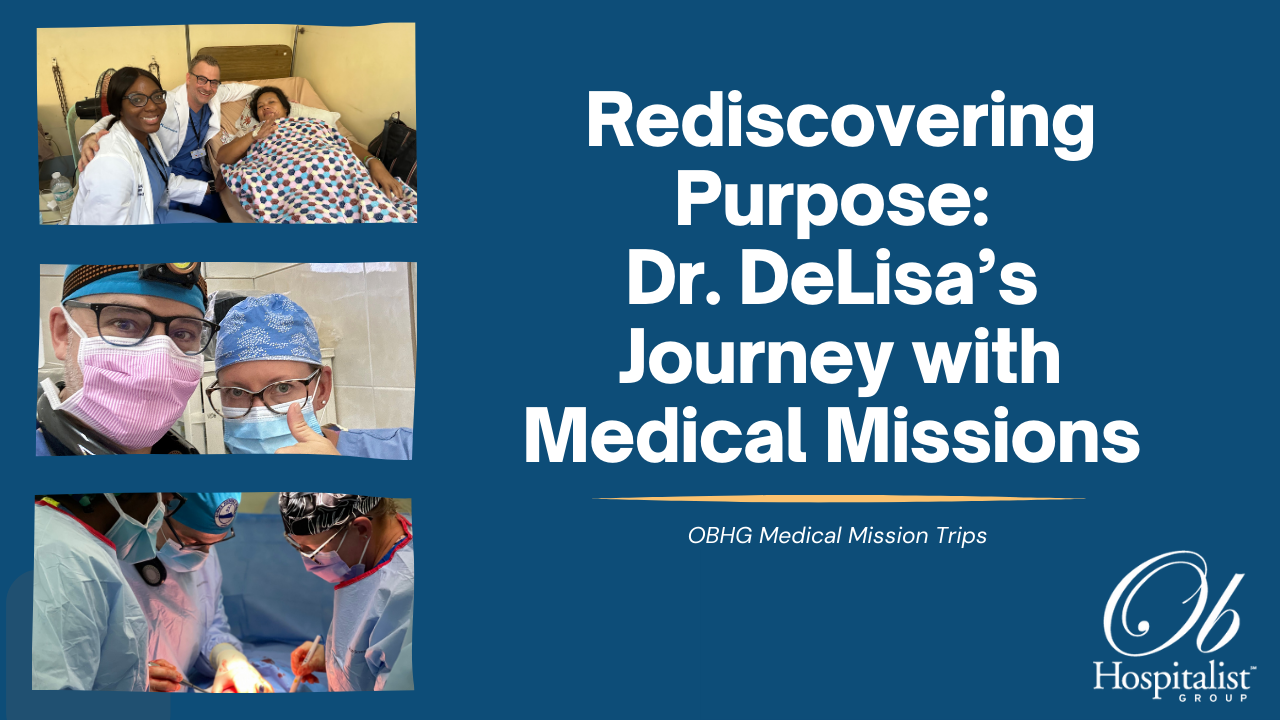
At OBHG, we empower our employees to make a meaningful impact in the care of women and children worldwide by supporting their participation in medical mission trips. The flexibility provided by a career as an OB hospitalist makes it easier for our clinicians to pursue these humanitarian endeavors.
Dr. Benjamin DeLisa, an OBHG Site Director and OB hospitalist in Washington, recently shared the profound impact that his mission trip experiences have had on his personal and professional life.
The seed of curiosity
For many, the journey towards participating in medical missions begins with a love of travel and an interest in experiencing different cultures. Dr. DeLisa’s story was no different. His initial curiosity was sparked by a lecture during his board training, where an older doctor recounted his transformative experience in the Congo. This doctor’s words about using one’s medical knowledge for a greater purpose resonated deeply, planting a seed that would come to fruition years later.
First steps into mission work
In 2014, inspired by a colleague’s mission story, Dr. DeLisa embarked on his first mission with Aloha Medical Missions. This organization, founded in the 1980s, focuses on providing surgical care in underserved areas, specifically the Philippines. What makes Aloha Medical Missions unique is its non-religious, surgery-centric approach, with a highly organized system that ensures efficient and impactful work.
A well-oiled machine
Aloha Medical Missions has developed a robust partnership with the local community, particularly with alumnae from St. Scholastica, a private school on a southern Philippine island. These women raise funds and help screen patients who are potential surgical candidates, ensuring that by the time the mission team arrives, they are ready to perform life-changing surgeries. Due to their ties to local politicians, they secure space in a local hospital including a few operating rooms and recovery units.
This year’s mission marked the 20th anniversary of the program. Over the course of five days, the team performed around 40 major gynecological surgeries, including hysterectomies and other surgeries for women suffering from large fibroids and cysts. The efficiency and organization of this mission stand out, thanks to meticulous pre-screening and strong local support.
The logistics
Each mission trip is a logistical feat. Volunteers bring their own personal effects and additional 50-pound boxes of medical supplies. While some equipment remains stored locally, critical items like anesthesia machines are either brought in by the team or flown in from Manila. The mission team includes surgeons, anesthesiologists, nurses, and even a magician in the past who entertained patients and local children, creating a unique and comforting environment.
The impact
For Dr. DeLisa, these missions have become an annual tradition. The sense of teamwork, purpose, and direct impact on patients’ lives revitalizes his passion for medicine. Working in such a cohesive, goal-oriented environment rekindles the intrinsic motivation that initially led him to the medical field.
Advice for aspiring mission volunteers
When asked for advice for clinicians considering mission work, he emphasized the importance of stepping out of one’s comfort zone. Despite the challenges—cost, time off, and unfamiliar environments—the rewards are immeasurable. Even those who participate only once report a positive and transformative experience.
Local opportunities
For those unable to travel internationally, there are local opportunities to make a difference. Dr. DeLisa’s early experiences included volunteering at a homeless shelter and a clinic for migrant farmworkers. These local efforts not only provided valuable medical experience but also reinforced the importance of serving underserved communities.
Final Thoughts
Medical missions offer a unique blend of professional development and personal fulfillment. They remind us of the profound impact we can have when we use our skills for the greater good. As Dr. DeLisa’s story illustrates, these experiences can reignite one’s passion for medicine and reaffirm our commitment to helping those in need.
“I don’t even think I knew this at the time, but I was experiencing a certain level of burnout that I didn’t even know, or I didn’t know what level it was at. And I decided to do the mission that year. I remember after the mission; it was a challenging experience for sure. But something about the functionality of the team that I worked with on the mission that first year, it was the purest team, like teamwork atmosphere that I’ve ever worked in. And something about working on this highly functioning team where everyone was on the same level, everyone supported each other 100% no matter what, it somehow, at least for a time, it cured my burnout. It revived something innate to why I went into medicine that went beyond just helping people, it was the sense of community, sense of teamwork with a common purpose, all of us together, getting this goal done. And then, of course, helping people at the same time, it was just this beautiful alchemy of all those things coming together. That’s probably why I keep doing it, because I look forward every year to revive my love of the field and of doing what I do.”
– Dr. Benjamin DeLisa
If you’re a clinician interested in OB/GYN mission work and you’d like to learn more about the OBHG lifestyle, contact our Recruiting team here.