

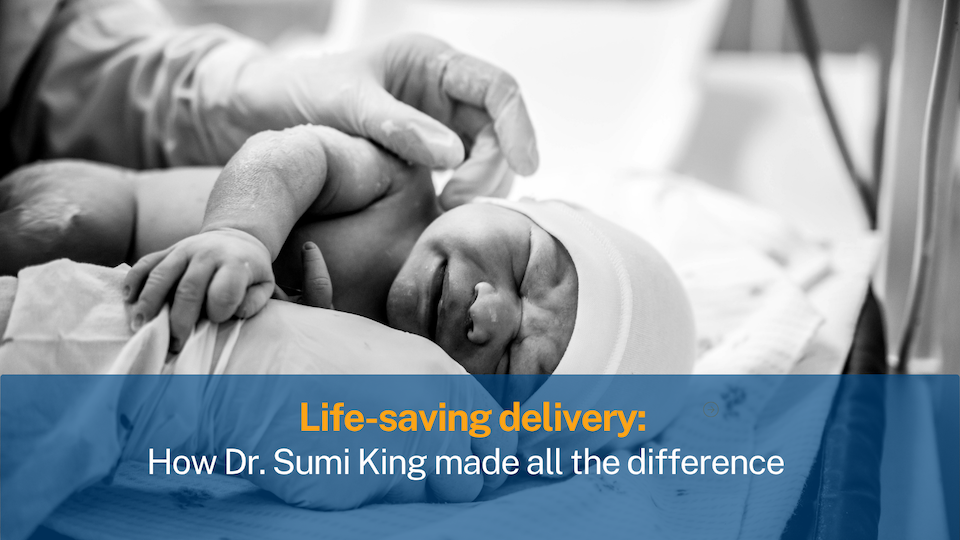
Every day, OBHG clinicians deliver life-saving care for all women with OB/GYN emergencies. Their presence in the hospital and dedication to patients makes a significant difference when every minute counts. Here is an incredible story about a life-saving intervention performed by one of OBHG’s amazing clinicians.
For Dr. Sumi King, an OB hospitalist at a Texas hospital, one ordinary day quickly turned into a life-or-death emergency—one that would underscore the power of teamwork, rapid response, and the critical importance of having hospitalists on-site 24/7.
A routine day turns critical
It began as a typical day in the labor and delivery unit. The team had been conducting postpartum hemorrhage drills, and the floor was busy but calm. At 5:09 p.m., a call came through the hospital’s Vocera system: the OB hospitalist was needed in one of the labor rooms.
Dr. King recalls walking in, initially unsure whether this was another drill—but it wasn’t. The patient was already in a hand-and-knee position, her baby’s heart rate having dropped from the 140s to the 50s and 60s for nearly nine minutes. The fetal bradycardia was not resolving. Time was running out.
Swift action and teamwork make all the difference
Dr. King quickly assessed the situation. The patient was fully dilated and ready to deliver. She explained to the patient and her support person that they needed to expedite delivery immediately. When the first push wasn’t effective, Dr. King reached for the vacuum device and proceeded with a vacuum-assisted delivery.
Within minutes, a baby boy was born. He had a loose nuchal cord around his neck, but Dr. King and the team swiftly provided suctioning and tactile stimulation. The newborn began to breathe and cough—a moment of collective relief and triumph for everyone in the room.
A miraculous outcome in just 15 minutes
Once stabilized, the baby was placed on his mother’s chest for skin-to-skin contact. The father cut the umbilical cord as nursery staff took over care. Dr. King handed off to the patient’s primary provider, who arrived just three minutes after the delivery.
In total, it took only 15 minutes from the onset of fetal distress to the baby’s safe arrival—a remarkable example of precision, communication, and calm under pressure.
On-site OB hospitalists make a critical difference
Dr. King credits the hospitalist model for the successful outcome.
“The value of having a hospitalist on site is that we can get a physician into the room immediately to expedite delivery when the provider is not on site,” she explains. “Depending on the community, that drive from the office could be long—especially during rush hour.”
Because she was already in the hospital, Dr. King could respond instantly—turning what could have been a tragedy into a life-saving moment.
A true testament to readiness and dedication
From a baby’s heart rate plummeting to a safe delivery in just 15 minutes, this story exemplifies why OB hospitalists are essential in modern maternity care. Their constant presence, rapid assessment, and collaboration with nurses and physicians make the difference between crisis and calm—between uncertainty and a healthy, crying newborn.
Dr. King’s story reminds us that every minute matters—and that having an experienced hospitalist ready to act can truly save lives.