

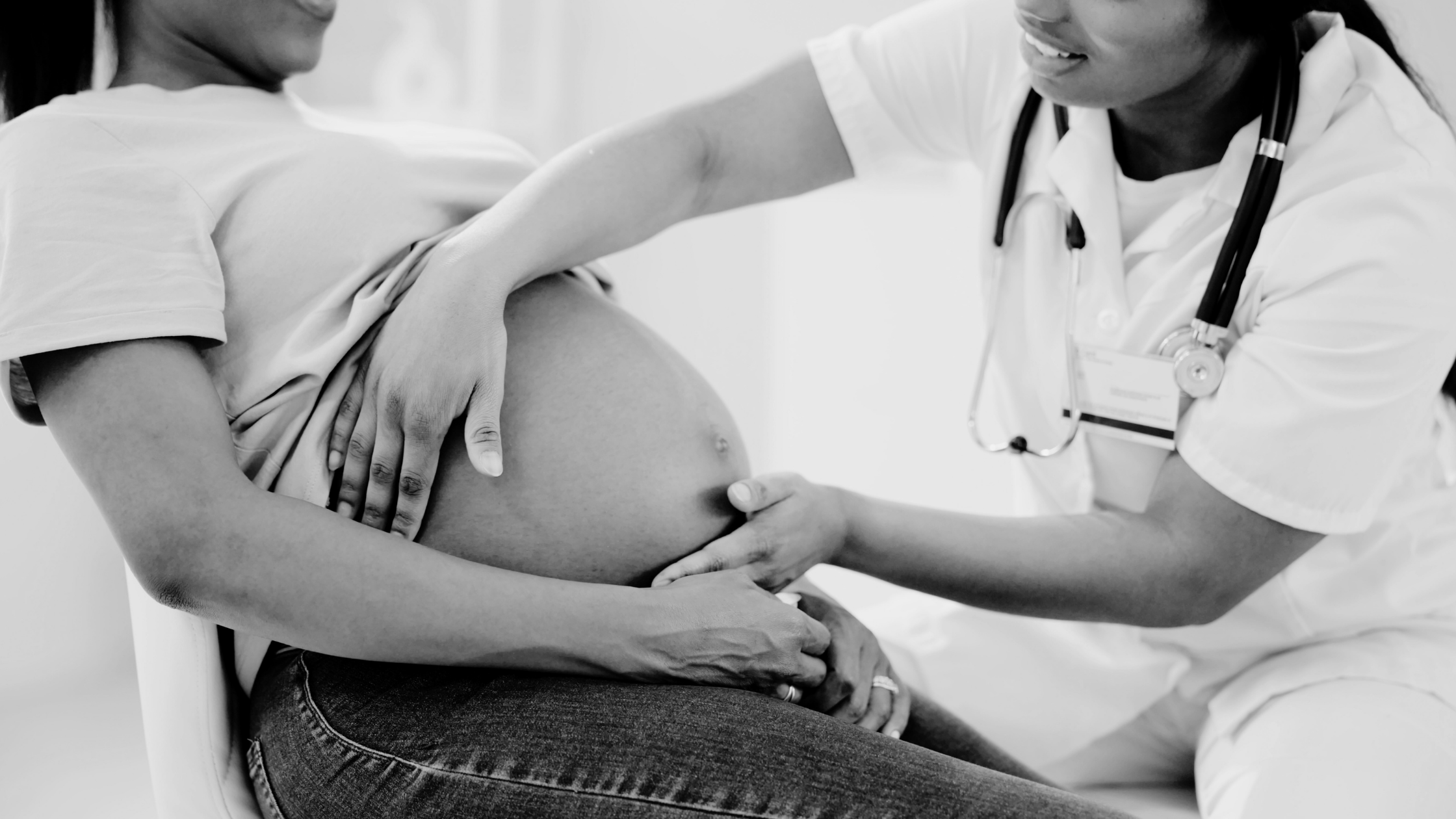
Industry report: OB hospitalists deliver more equitable care across racial lines
Shortly after the birth of her son via cesarean section, 30-year-old Shamony Gibson began to experience shortness of breath. Although she repeatedly reached out to medical professionals to raise concerns about her symptoms, her warnings went largely unheeded. When she collapsed from chest pains two weeks postpartum, she was rushed to the hospital, where doctors and staff repeatedly asked her if she was on drugs. Just twelve hours after being admitted, Shamony Gibson died—the result of a preventable pulmonary embolism that formed following her c-section.
Olympic gold medalist Tori Bowie was found dead in her home from complications including eclampsia and respiratory distress 8 months into her pregnancy. A medical examiner found that Bowie was in labor when she died.
These women’s stories, and many others like them, highlight an ongoing maternal health crisis for Black women in the U.S., where they are three times more likely to die from pregnancy-related causes than white women—a statistic that underscores the deep-rooted flaws in healthcare delivery and access. Whether due to inadequate care, implicit bias, or lack of resources, the disparities in maternal outcomes reflect a serious public health issue that demands action.
OB hospitalists: a viable solution for equitable care
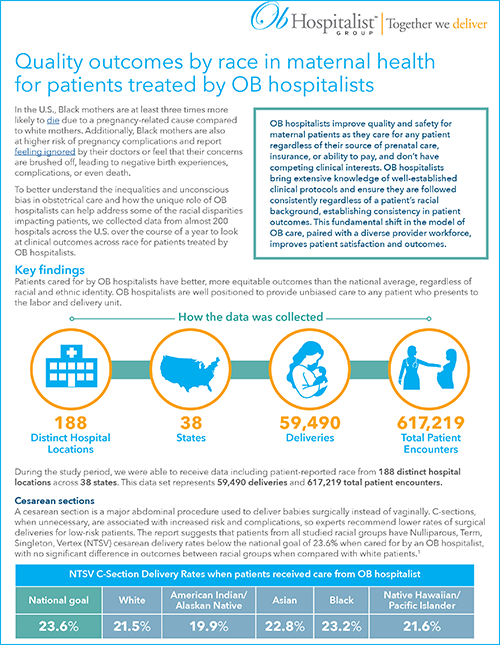
Research indicates that OB hospitalists, who provide round-the-clock care in hospitals, play a key role in improving maternal health outcomes across racial and ethnic groups. The OB hospitalist model can be utilized to create a more standardized approach to care, ensuring that every patient, regardless of race or background, receives the same level of attention and treatment. Data collected from 188 hospital locations across 38 states, representing over 59,000 deliveries and 617,000 patient encounters, shows that patients cared for by OB hospitalists experience better and more equitable outcomes than the national average.
This consistent care model is particularly effective in mitigating the disparities that have long plagued maternal health. OB hospitalists are uniquely positioned to provide unbiased, evidence-based care, using well-established clinical protocols to treat any patient who presents at the labor and delivery unit—regardless of race, ethnicity, or socioeconomic status.
The role of diversity and implicit bias training
This consistent care model, combined with a more diverse workforce and intentional efforts to address bias, is key to tackling the disparities that persist in maternal health. Research shows that a diverse clinical workforce—one that mirrors the communities it serves—can improve outcomes for Black patients and other underrepresented groups.
Diversity within the clinical workforce is critical for improving maternal health outcomes for Black women and other underrepresented groups. OBHG leads the way in increasing representation within healthcare. Compared to the national average reported by ACOG, OBHG’s clinician workforce is 17.2% Black, more than double the national average of 7.1%. By fostering a workforce that reflects the diversity of the patients it serves, OBHG is actively contributing to more equitable healthcare outcomes.
Additionally, implicit bias training is essential in ensuring that all patients receive the same standard of care. OBHG requires all clinicians to complete annual implicit bias training, equipping them with the tools to recognize and address disparities. It is vital that other health systems follow suit by implementing similar practices, which have been shown to positively impact patient outcomes.
A broader call to action
The data is clear: OB hospitalists, with their focus on consistent, unbiased care, have a profound impact on improving maternal health outcomes across racial lines. However, achieving equity in maternal healthcare will require more than just adopting the OB hospitalist model. Health systems must prioritize diverse hiring, ensure proper training to eliminate implicit biases, and actively work to close the gap in maternal care disparities.
For further insights into this ongoing challenge and solutions, read more about OBHG’s findings in the 2023 report on unbiased care and learn about closing the disparity gap in Black maternal mortality.
Oops! We could not locate your form.